Future Steps of the Migration Policy Centre
New projects
A project on the integration of third-country nationals as a three-way process: immigrants, countries of emigration and countries of immigration as actors of integration will start is in cooperation with the Migration Policy Institute (MPI-Brussels) (Washington DC) with a focus on the role played by the country of origin.
An observatory of migration in the Arab Gulf States, the “Gulf Labour Markets and Migration Programme” is about to start in cooperation with the Gulf Research Centre (Dubai and Geneva).
New core programme: “Migration in the coming decade”
A new core programme shall be launched this year.
The aim is to draw up scenarios of future migratory movements relevant to the European Union:
- Factoring migration in demographic projections
- Migration and EU labour markets: what skills, what supply, what demand?
- Global political and economic changes and migration flows to the EU
- Ageing and Migration.
Evaluation of the EU migration policy
The MPC proposes to the European Commission and the European Parliament to evaluate: the Global Approach to Migration and Mobility (GAMM) and its tools, including migration profiles, visa facilitation, and mobility partnerships.
The evaluation would answer questions such as: What did GAMM and its tools produce? What was their actual impact on migration?
The MPC will also evaluate the principle of “European Preference”: How is it implemented by EU Member States? When and how can third-country nationals within and outside the EU have access to employment in the EU?
The Chinese migration and the economic strategy of China
The project aims at analysing the existing links between China’s foreign and economic policies fostering investment and development at home and the Chinese communities present (or not) in different countries in the EU and its neighbourhood.
It includes several case studies aimed at assessing: (a) the role of migration and Chinese overseas communities in shaping economic relations between each country and China; and (b) the impact of foreign direct investment flows from China on the recipient countries’ labour market.
Other MPC News
VIII Migration Summer School: Social Movements, Systemic Change and Migration
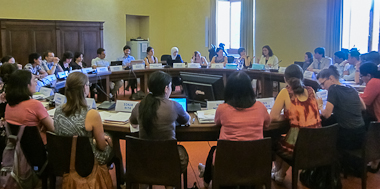
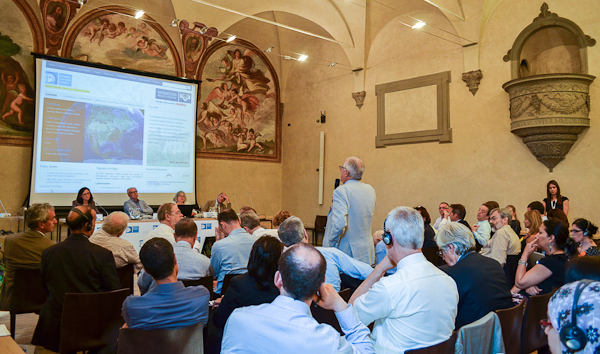
The VIII Migration Summer School (25th June – 6th July) witnessed intense discussions on the interactions of the regions of origin and the regions of destination; migration policies and the regulation of migration; and processes of integration.
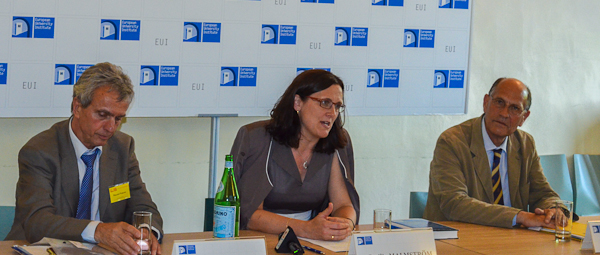
A key event of the school was the round-table discussion between the students and the EU Commissioner of Home Affairs, Cecilia Malmström which gave a unique opportunity to the students to directly interact with the Commissioner.
The VIII Migration Summer School was co-funded by the European Union through the CARIM-East project and by the MPC.
CARIM – India: High Level Dialogue between India and the EU
During the High Level Dialogue between India and the EU on Migration and Mobility (2nd – 3rd July) specific topics were discussed, including skill matching between the EU and India; the mobility of students, researchers and scientists; migration and development (particularly cooperation on research); and cooperation on promoting safe and legal migration and preventing irregular migration.
The meeting reflects the EC´s growing interest in promoting closer ties with India, both economically (access to India´s market) and politically, while India is keen to promote greater mobility for its skilled professionals in Europe.
The CARIM India project is co-financed by the European Union
Know Reset website
The Know Reset website is a unique tool in the field of resettlement since it is the first website mapping EU’s involvement in refugee resettlement.
It focuses on resettlement in the EU and covers the 27 EU Member States, involved in resettlement in one form or another, and to various degrees.
It covers the great diversity in terms of commitment towards resettlement in the EU and shows a series of recent evolutions in that domain.
This website contains a database addressing resettlement at EU level and at Member State level.
It provides legal, administrative and policy documents as well as statistics collected from national authorities by our correspondents in the 27 Member States.
Know Reset is a project co-financed by the European Union.
|
 Version française |
  Русская версия


 The European Commission supports the EUI through the European Union budget. This communication reflects the views only of the authors, and the Commission cannot be held responsible for any use which may be made of the information contained therein.